“Lafcadio Hearn and James Joyce” Ambassador's Letter (June)
2026/6/30
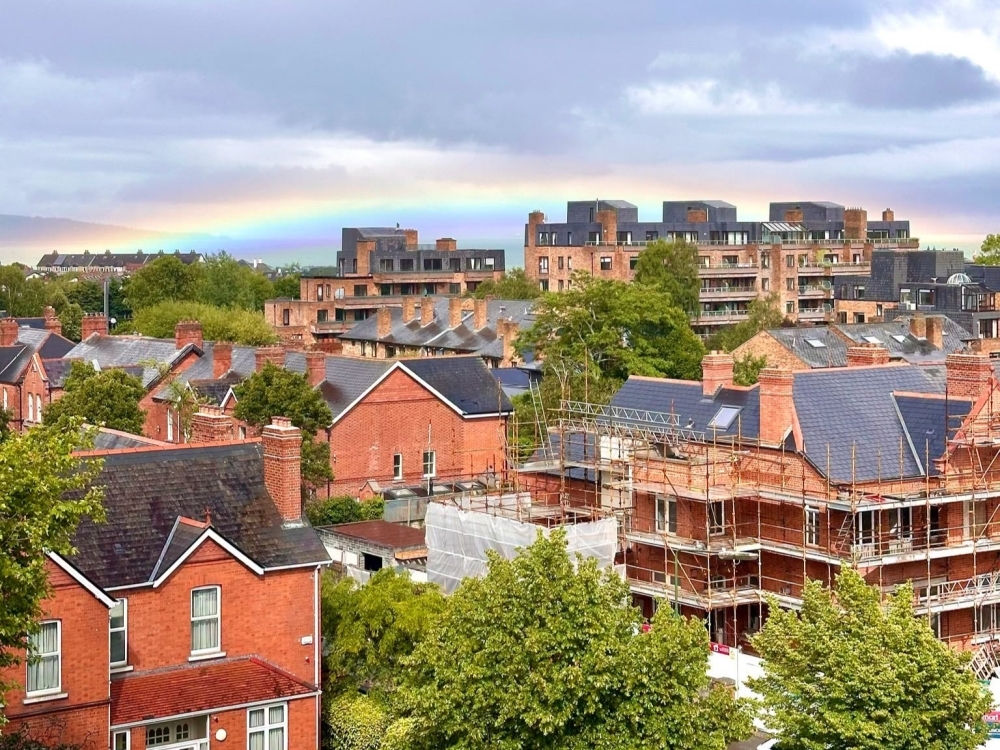 A view of a rainbow from the Embassy of Japan in Ireland (Photo taken in June 2026)
Dear Readers,
I hope this letter finds you well as early summer settles in. Here in Ireland, we have enjoyed an unusually sunny month, as though the country were making up in one sweep for the lack of daylight through the winter. Even so, there have still been those unmistakably Irish days when all four seasons seem determined to make an appearance before nightfall. On such days, the ever-changing skies occasionally reward us with rainbows stretching across the skies from every conceivable angle.
I hope this letter finds you well as early summer settles in. Here in Ireland, we have enjoyed an unusually sunny month, as though the country were making up in one sweep for the lack of daylight through the winter. Even so, there have still been those unmistakably Irish days when all four seasons seem determined to make an appearance before nightfall. On such days, the ever-changing skies occasionally reward us with rainbows stretching across the skies from every conceivable angle.
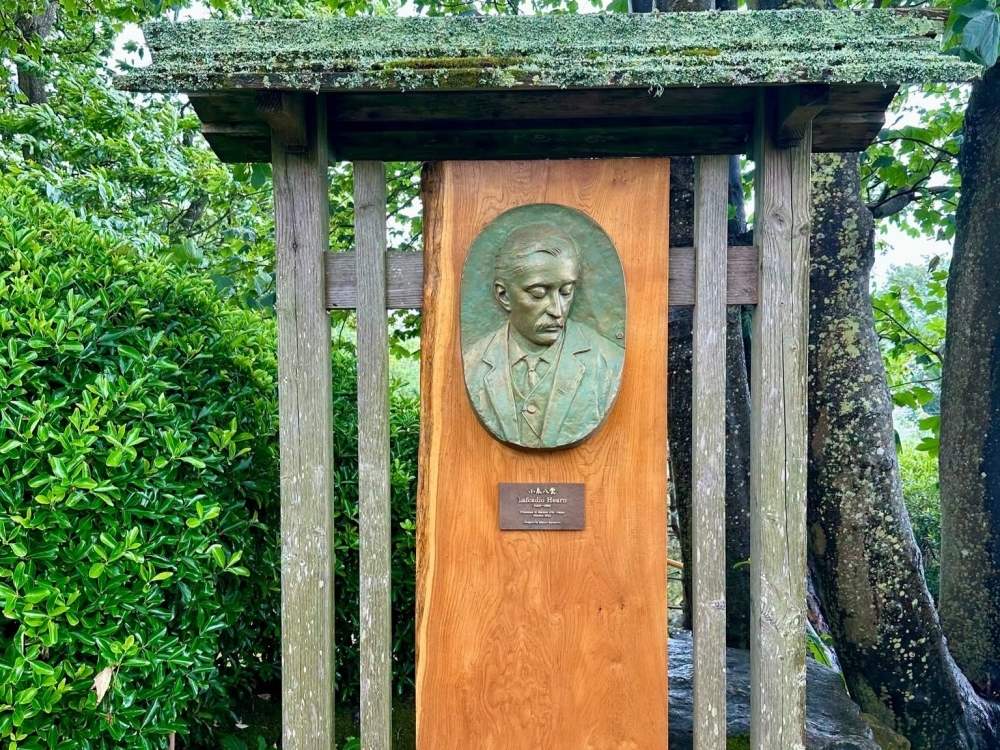 Lafcadio Hearn Japanese Gardens (Photo taken in Tramore, County Waterford on 27 June 2026)
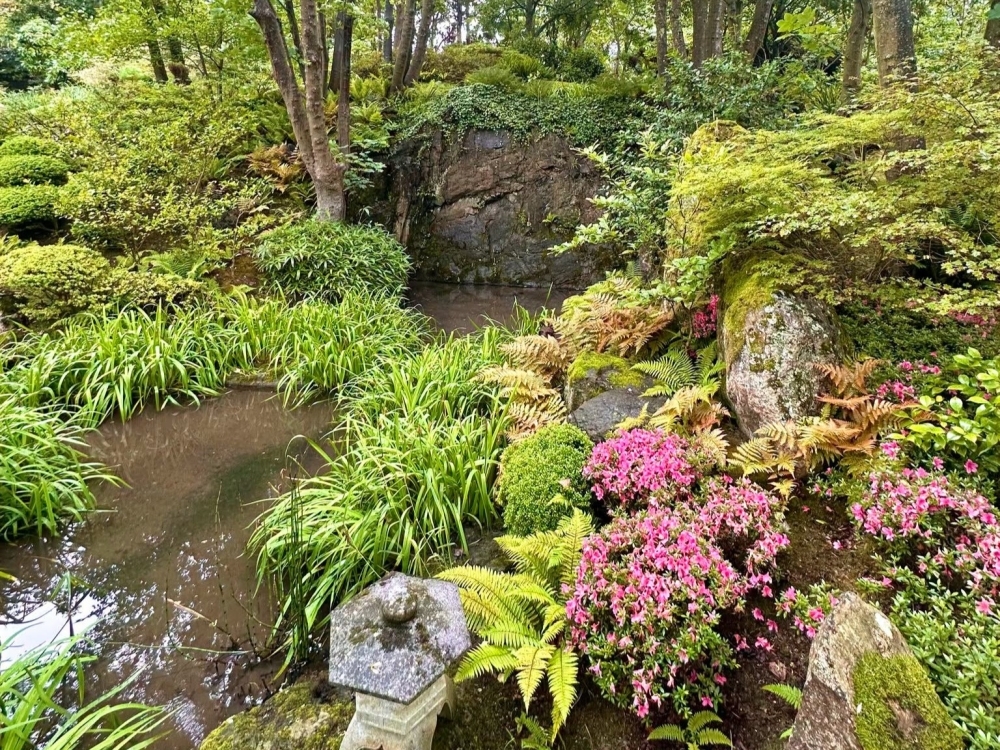 Lafcadio Hearn Japanese Gardens (Photo taken in Tramore, County Waterford on 27 June 2026)
This month also brought two occasions associated with two eminent figures of Irish literary history. One is Patrick Lafcadio Hearn (1850–1904), better known in Japan as KOIZUMI Yakumo. The other is James Joyce (1882–1941). I suspect quite a number of Irish readers of this letter may ask, "Who exactly was Lafcadio Hearn?"
In Japan, Lafcadio Hearn is a household name. Many people immediately recall that he wrote The Story of Mujina—better known through its unforgettable "faceless ghost (Nopperabo)"—while others may mention the recent NHK morning television drama “Bakebake (Ghost Writer’s Wife)”, or simply remember studying him in school textbooks.
Lafcadio Hearn was born to a Greek mother and an Irish father, and he spent part of his childhood in Ireland. Then, he moved to the United States and worked as a journalist. In 1890, he arrived in Japan, where he began teaching English in Matsue City. There he married KOIZUMI Setsu and immersed himself completely in Japanese life. He became one of Japan's most sympathetic interpreters as well as an enthusiastic missionary to introduce Japanese culture and traditions to the English-speaking world through his writings. He remained in Japan for the rest of his life, leaving a legacy that has earned him enduring gratitude and affection in the country he chose as his home.
In Japan, Lafcadio Hearn is a household name. Many people immediately recall that he wrote The Story of Mujina—better known through its unforgettable "faceless ghost (Nopperabo)"—while others may mention the recent NHK morning television drama “Bakebake (Ghost Writer’s Wife)”, or simply remember studying him in school textbooks.
Lafcadio Hearn was born to a Greek mother and an Irish father, and he spent part of his childhood in Ireland. Then, he moved to the United States and worked as a journalist. In 1890, he arrived in Japan, where he began teaching English in Matsue City. There he married KOIZUMI Setsu and immersed himself completely in Japanese life. He became one of Japan's most sympathetic interpreters as well as an enthusiastic missionary to introduce Japanese culture and traditions to the English-speaking world through his writings. He remained in Japan for the rest of his life, leaving a legacy that has earned him enduring gratitude and affection in the country he chose as his home.
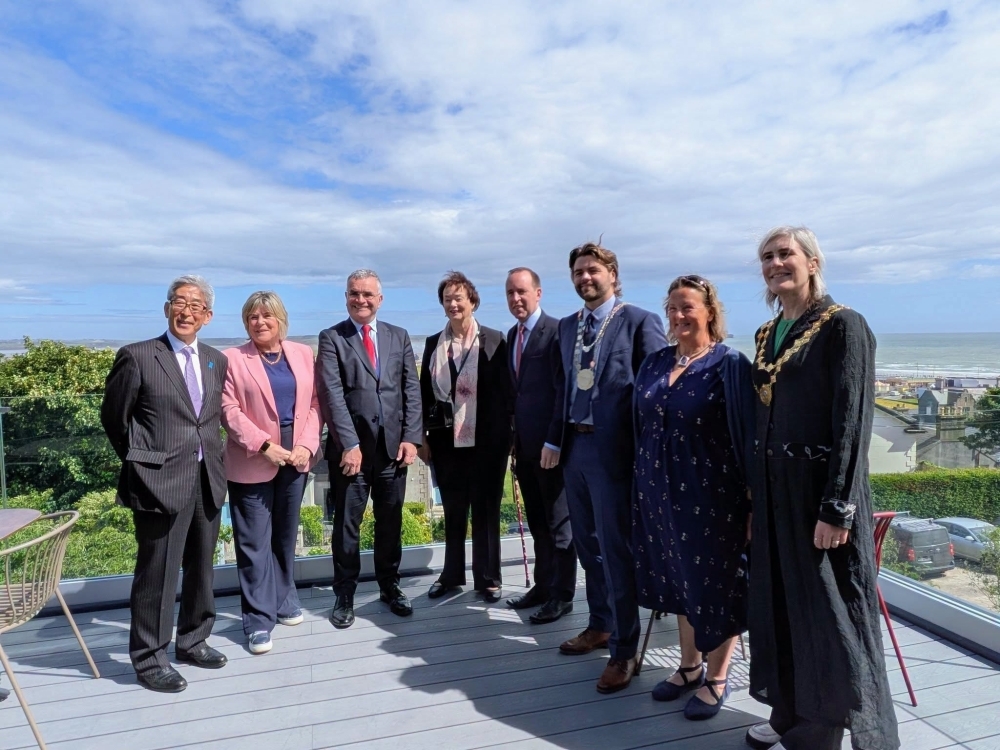 Opening of KOKORO Heritage Centre, Lafcadio Hearn Japanese Gardens (Photo taken on 8 June 2026 in Tramore, County Waterford)
On Saturday, 27 June, which is Hearn's birthday, I revisited the Lafcadio Hearn Japanese Gardens in Tramore, County Waterford. I drove just over two hours from Dublin through intermittent rain, intending to spend a Saturday afternoon at the café of the newly opened Kokoro Heritage Centre of Koizumi Yakumo Japanese Gardens on 8 June. As we stepped inside, I immediately noticed a familiar face and unmistakably tall figure seated near the terrace. It was Ms Agnes Aylward, who for many years has devoted herself to introducing Lafcadio Hearn's life and legacy to people throughout Ireland, together with her husband, Seán. Agnes was recently awarded the Order of the Rising Sun, Gold and Silver Rays, in recognition of her contribution.
My wife and I greeted Agnes and Seán with genuine surprise and visited their nearby home a couple of hours later. Although I had met Agnes and Seán a few times before, this visit offered the opportunity for even deeper conversation. We spoke at length about Hearn himself, about the article published in one of Ireland's leading newspapers on 27 June covering the opening of the Kokoro Heritage Centre, and about the long history of exchanges between Japanese visitors and the Aylward family.
My wife and I greeted Agnes and Seán with genuine surprise and visited their nearby home a couple of hours later. Although I had met Agnes and Seán a few times before, this visit offered the opportunity for even deeper conversation. We spoke at length about Hearn himself, about the article published in one of Ireland's leading newspapers on 27 June covering the opening of the Kokoro Heritage Centre, and about the long history of exchanges between Japanese visitors and the Aylward family.
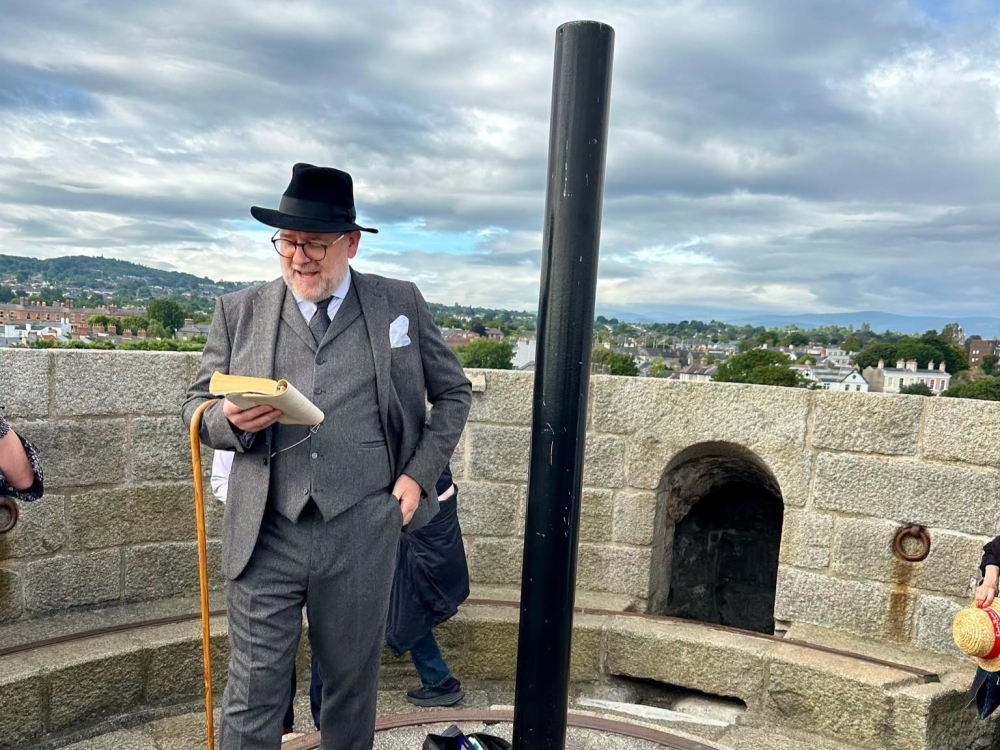 Recitation of a passage from ’Ulysses’ by James Joyce (Photo taken at the Martello Tower in Sandycove on 16 June 2026)
 Breakfast on Bloomsday at Belvedere College in Dublin (Photo taken on 16 June 2026)
Unlike Lafcadio Hearn, James Joyce scarcely requires an introduction for Irish readers. When Hearn first arrived in Japan in 1890, Joyce — the writer who would become Ireland's greatest literary figure of the twentieth century — was an eight-year-old schoolboy. By the time Hearn died in 1904, Joyce was in his early twenties. The little over twenty years during which their lives overlapped were years of profound transformation for both Japan and Ireland. In Japan, the country was moving rapidly through the Meiji Restoration which reopened the country to the rest of the world, vigorously promoting modernisation, industrialisation, and the building of a strong modern state. Ireland, meanwhile, was experiencing its own period of historic change: land reform was gradually improving the position of tenant farmers; the campaign for Home Rule continued unabated; and movements to revive the Irish language, Irish literature, and national culture gathered increasing momentum.
Although Hearn, living in Japan, and Joyce, who would soon make his home on the European continent, probably never crossed paths, they lived in the same period for about two decades. As Hearn was settling into life in Matsue, Joyce was studying at Belvedere College in Dublin. He later entered University College Dublin, and around the time of Hearn's death in 1904, he met the woman who would become his future wife before leaving Ireland for continental Europe with her.
The year 1904 holds special significance for another reason. Joyce's masterpiece, ‘Ulysses’, published in 1922, recounts the events of a single day in Dublin — 16 June 1904. Every year that date is celebrated throughout Ireland as Bloomsday, when friends, families and literary enthusiasts gather to read passages from the novel together. For me, experiencing my first Bloomsday during my first year in Ireland was a day filled with delightful discoveries. It began with a public reading of ‘Ulysses’ on the roof of the Martello Tower in Sandycove, where Joyce is said to have stayed for six days. From there I attended the James Joyce Society's traditional Bloomsday breakfast at Belvedere College, Joyce's former school. In the evening, together with members of the Embassy and parliamentarians led by Ms Emer Currie TD, Convenor of the Ireland-Japan Parliamentary Friendship Group, I found myself taking part in my very first recitation of ‘Ulysses’.
Although Hearn, living in Japan, and Joyce, who would soon make his home on the European continent, probably never crossed paths, they lived in the same period for about two decades. As Hearn was settling into life in Matsue, Joyce was studying at Belvedere College in Dublin. He later entered University College Dublin, and around the time of Hearn's death in 1904, he met the woman who would become his future wife before leaving Ireland for continental Europe with her.
The year 1904 holds special significance for another reason. Joyce's masterpiece, ‘Ulysses’, published in 1922, recounts the events of a single day in Dublin — 16 June 1904. Every year that date is celebrated throughout Ireland as Bloomsday, when friends, families and literary enthusiasts gather to read passages from the novel together. For me, experiencing my first Bloomsday during my first year in Ireland was a day filled with delightful discoveries. It began with a public reading of ‘Ulysses’ on the roof of the Martello Tower in Sandycove, where Joyce is said to have stayed for six days. From there I attended the James Joyce Society's traditional Bloomsday breakfast at Belvedere College, Joyce's former school. In the evening, together with members of the Embassy and parliamentarians led by Ms Emer Currie TD, Convenor of the Ireland-Japan Parliamentary Friendship Group, I found myself taking part in my very first recitation of ‘Ulysses’.
 Minister Peter Burke of the Department for Enterprise, Tourism and Employment and Ambassador MIYAGAWA Manabu unveiling a plaque at the inauguration ceremony of NTT DATA's new office in Dublin (Photo taken in June 2026)
Reflecting on these experiences, I was struck by how the literary achievements of these two remarkable Irish figures continue to foster connections between Japan and Ireland. Born during periods of dramatic change in both countries, their works have transcended time, continuing to inspire encounters, friendships and cultural exchange in countless places across Japan and Ireland alike.
Tomorrow marks the beginning of July. I look forward to meeting you again next month, whether somewhere in Ireland or once more on these pages. Until then, I wish all our readers good health and every happiness.
Yours sincerely,
MIYAGAWA Manabu
Ambassador of Japan to Ireland
Tomorrow marks the beginning of July. I look forward to meeting you again next month, whether somewhere in Ireland or once more on these pages. Until then, I wish all our readers good health and every happiness.
Yours sincerely,
MIYAGAWA Manabu
Ambassador of Japan to Ireland